EBSD Processing and Simulation
Electron backscatter diffraction from end to end, from physics simulation and GPU dictionary indexing to detector calibration and data acquisition.
Electron backscatter diffraction (EBSD) reveals the crystal structure of a material inside a scanning electron microscope. Electrons scattered back from a tilted sample form diffraction patterns on a detector, and from those patterns you can work out the crystal orientation and phase at every point of a map. Reliable results take good physics, a well calibrated detector and a lot of computation.
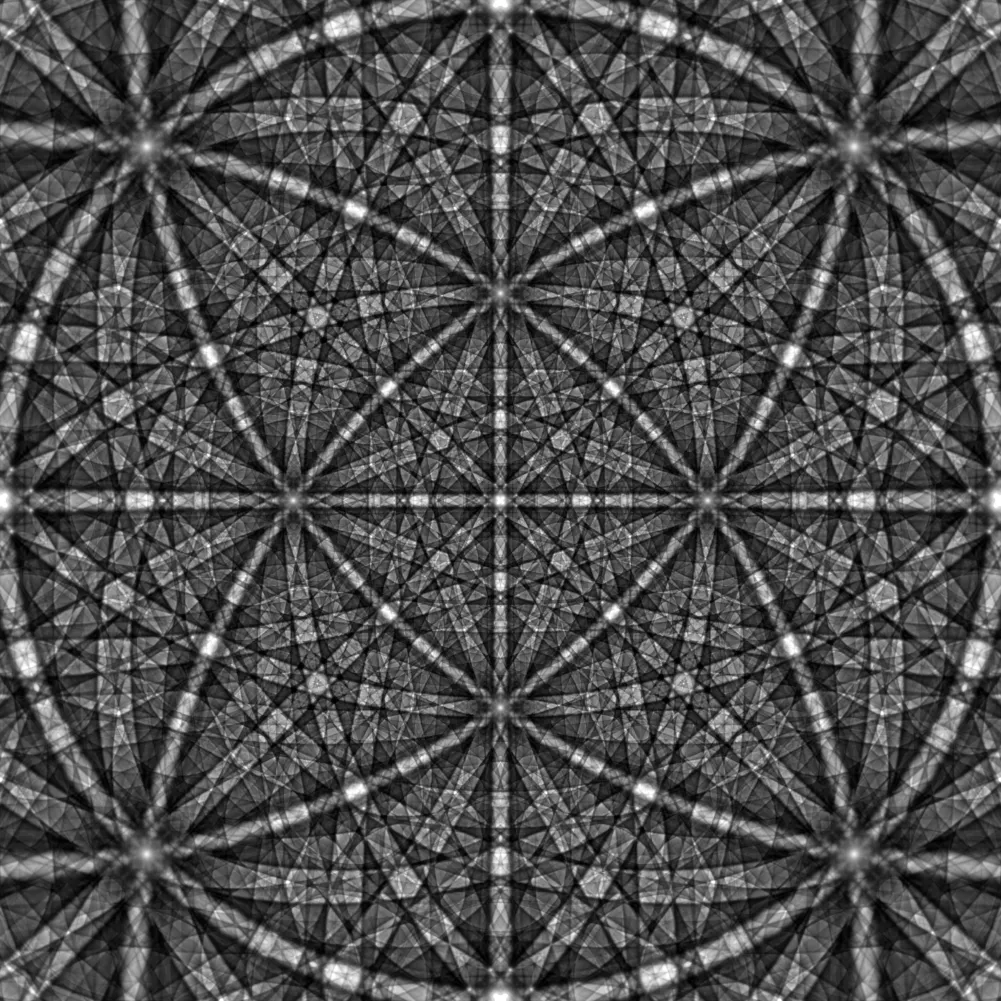
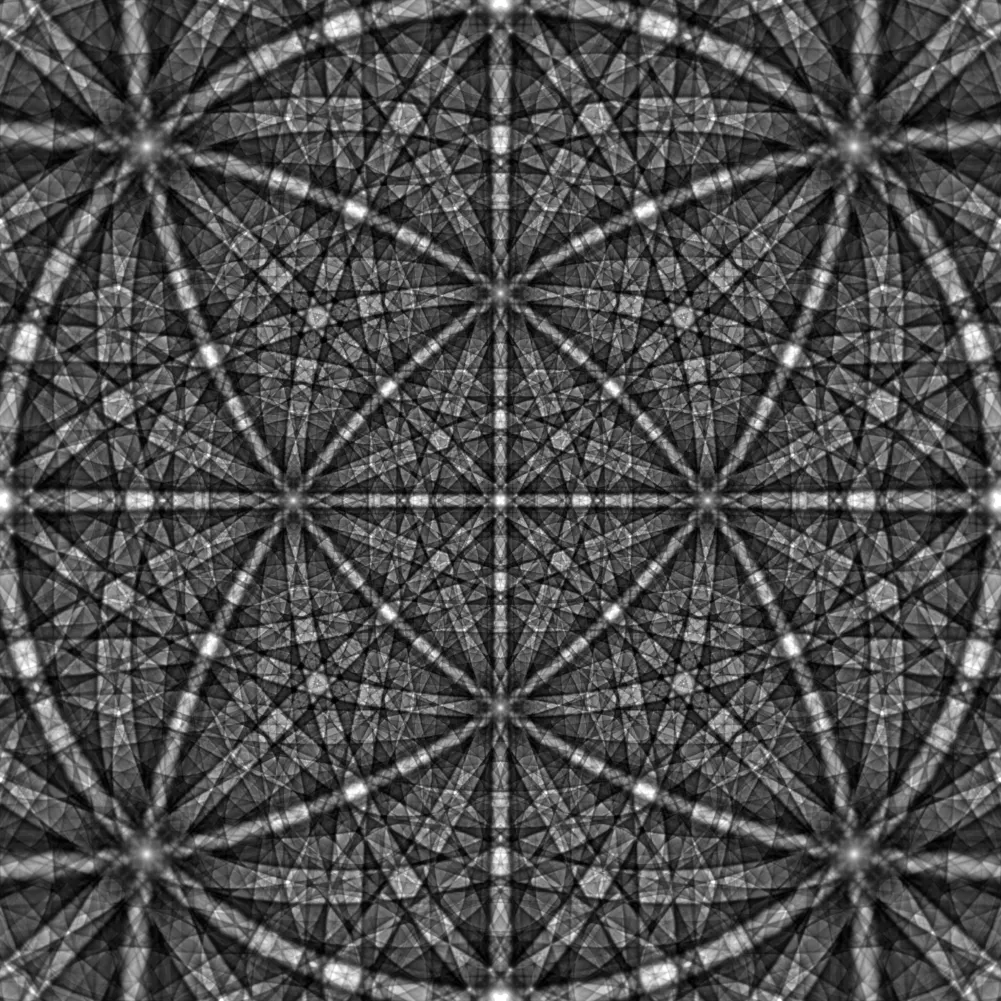
My work covers most of the chain behind it. On the physics side, that means Monte Carlo simulation of how electrons scatter inside the sample, and dynamical diffraction simulation that turns the result into realistic patterns like the one above. Both run on the GPU.
The simulated patterns feed dictionary indexing, where every measured pattern is compared with a large dictionary of simulations to find the best match. It is computationally heavy, so it runs on the GPU as well.
Closer to the instrument, I’ve worked on detector calibration, processing of the detector data and data acquisition. Because all of these parts depend on each other, I also designed the testing framework that checks the whole chain whenever something changes.
Gallery