Python
My go-to for prototyping, data exploration and visualization, proofs of concept and research code. The scientific Python stack and JAX let me test an idea within hours instead of days.
Hi, I'm
Software Scientist at Thermo Fisher Scientific
I write the software that gets the most out of scanning electron microscopes. My work spans physics simulation of electrons, detectors and optics, crystallography, and the image processing and automation that run on the instrument.
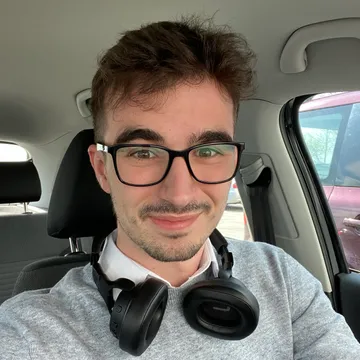
About
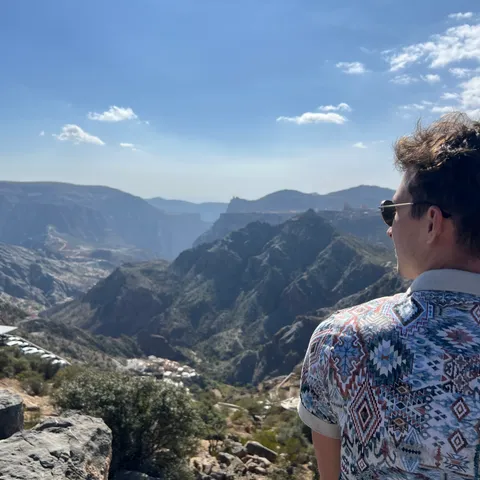
I'm a software scientist at Thermo Fisher Scientific in the Czech Republic, working on scanning electron microscopes. My background is in computer vision, machine learning and mathematical modeling, and in 2022 I graduated with honors from Brno University of Technology with a master's degree in Cybernetics, Control and Measurement.
What I enjoy most is the whole path from an idea to working software. My biggest strength is how quickly I adapt and learn: I pick up new concepts on the fly and apply them straight away, which comes in handy when a project leads somewhere unfamiliar.
Outside of work I like to travel and explore other cultures and natural sites, ideally with some diving along the coast. At home you'll usually find me gardening, cooking, tinkering with my computer, playing games or watching movies, and every now and then I bake a cake.
Experience
Thermo Fisher Scientific
I'm part of a small team that prototypes new technology for scanning electron microscopes. Over the years I've worked on challenging image processing and automation, imaging and custom metrology, and modeling of detectors and electron optics. Today much of my work is in physics simulation, optical aberrations and crystallography, especially electron backscatter diffraction (EBSD).
Brno University of Technology
Automatic recognition of American Sign Language from the interpreter's hand and face pose, followed by avatar interpretation of the recognized signs in Czech Sign Language. Part of the work was presented at the EEICT student conference, where it won a sponsor award and the best paper award. The thesis also received the Dean's award for an outstanding thesis.
Brno University of Technology
Specialized in computer vision, machine learning and image processing. I led several student projects in these fields, such as automatic bee counting at a beehive and automatic calibration of fused RGB, depth and thermal cameras for a medical robotic manipulator.
Brno University of Technology
A broad introduction to automation, programming, electronics and mathematics. My bachelor's thesis focused on 3D camera localization from markers placed at known positions, one of the building blocks of augmented reality.
Skills
My go-to for prototyping, data exploration and visualization, proofs of concept and research code. The scientific Python stack and JAX let me test an idea within hours instead of days.
For production: turning proven prototypes into fast, reliable software, optimizing the hot paths and working close to the hardware when performance really matters.
Turning images into measurements and decisions, from image quality improvement, automated navigation and metrology in microscopy to pose estimation and camera calibration.
Detection, recognition and pose estimation models, taken from training and evaluation all the way to running in real applications.
Describing how real systems behave, with physical models of hardware or models identified from measurements, so a process can be simulated, predicted and controlled.
Making working algorithms fast: vectorizing and JIT compiling with JAX, moving heavy computation to the GPU and rewriting critical parts in C++, Rust or Zig.
The foundation under everything else: linear algebra, geometry, optimization, signal processing and the physics needed to simulate real systems, including Monte Carlo methods.
Designing technical solutions with maintenance and scalability in mind, from data acquisition to the final result, along with the testing that keeps connected parts working together.
Every project starts with a problem worth solving. Before any code is written, I work out what is really needed, what success looks like and which constraints matter.
I go through the state of the art and the relevant scientific literature and pick out the approaches that actually fit the problem.
A quick prototype tests the most promising approach on real data. It's cheap to throw away and shows early whether the idea holds up.
Once the idea has proven itself, I turn it into a concrete technical design together with the team, weighing the options against the constraints in open design discussions.
I turn the prototype into efficient, tested production code and optimize the critical parts where performance matters.
Projects
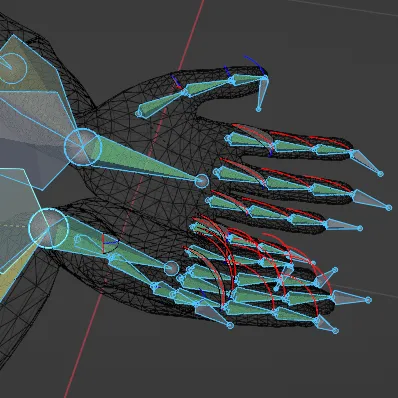
Recognizing American Sign Language from hand and face pose and re-signing it in Czech Sign Language with a 3D avatar.
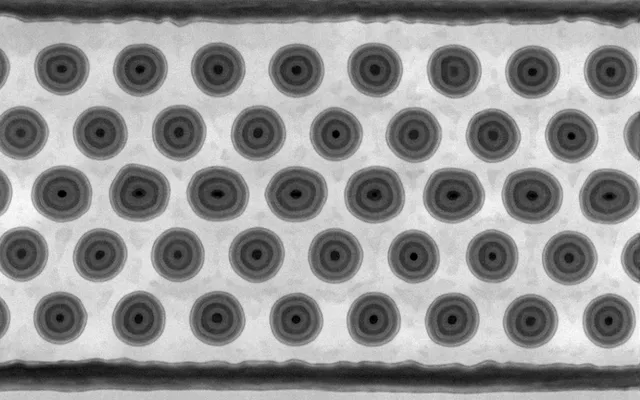
Automated navigation, imaging and metrology of 3D NAND memory structures in a scanning electron microscope.
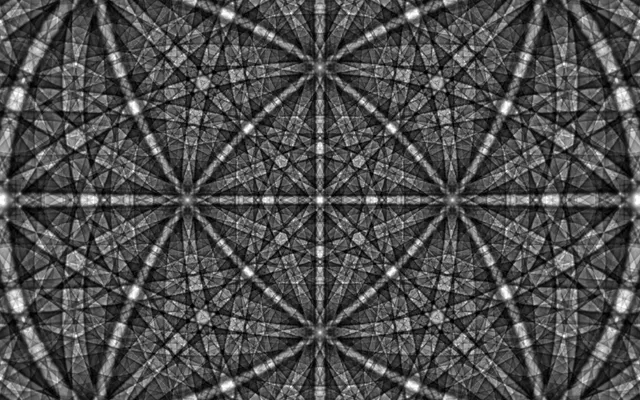
Electron backscatter diffraction from end to end, from physics simulation and GPU dictionary indexing to detector calibration and data acquisition.
Applications
A desktop library for research papers. Import from PDFs, arXiv or Zotero, read and annotate, search by meaning offline, and chat with your library, getting answers that cite their sources.
research-assistant.meA recipe app for whoever cooks for the household. Versioned recipes, an AI cooking partner, household preferences, meal planning and grocery lists, all stored locally.
season-to-taste.meContact
I'm always happy to talk about simulation, image processing or building scientific software, so feel free to reach out.